Visual Heritage
Explore the essence of Bahamian culture through compelling photographs that capture the beauty and decline of West Coconut Grove's architectural heritage.
Join us on this visual exploration of culture, identity, and change within a transforming community.
My Portfolio
Welcome to my portfolio. Here you’ll find a selection of my work. Explore my projects to learn more about what I do.


Introduction
There are problems that can be solved with better craftsmanship and problems that cannot. A roof can be repaired. A porch can be rebuilt. A window can be replaced. But a neighborhood’s identity is not an object you can patch once and expect to hold. When the forces tearing at it are systemic, a fresh coat of paint becomes a kind of polite fiction.
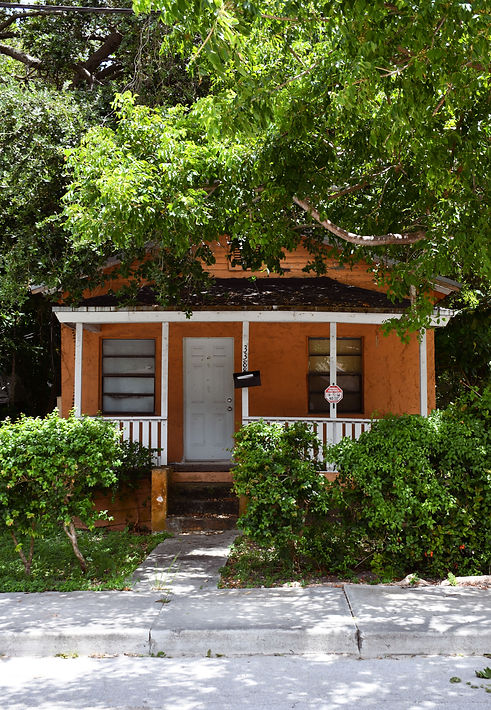
This photojournalism project began as a personal inventory. I grew up with West Coconut Grove as a familiar geography: small houses set close to the street, bright colors that felt less like aesthetic choice than lived declaration, yards that blurred into sidewalks, fences that spoke a private language of safety and pride. Over time, I noticed a pattern that was too consistent to dismiss as coincidence. The houses that carried the neighborhood’s Bahamian inheritance, the modest cottages and their improvised additions, were not simply “aging.” They were being outcompeted.
So I started photographing. Not as nostalgia, and not as tourism, but as documentation. The camera offered me a way to be honest about what was happening without making it abstract. You can argue about gentrification in numbers and policy memos, but a photograph captures what those documents often conceal: the precise textures of disappearance. Torn awnings that have sheltered families for decades. Boarded windows that signal the moment a home stops being a home and becomes a future lot. “For Sale” signs standing where community memory once felt ordinary. Streets where mobility is not a lifestyle choice but a practical improvisation, people moving through the neighborhood at the speed of daily life.

What emerged, again and again, was that the loss of Bahamian architecture in West Coconut Grove is not merely an architectural story. It is the visible edge of a larger mechanism: rising property values, speculative redevelopment, and a housing market that treats location like a financial instrument while treating residents like incidental occupants. And this is where the problem becomes difficult in the most important way. The market does not need malice to erase a community. It only needs incentives.
West Coconut Grove as a Cultural System

West Coconut Grove is routinely described as historic, but the word historic can be a kind of anesthesia. It makes the neighborhood sound safely past tense, an artifact rather than a living social world. What matters here is not simply that Bahamian migrants settled the area, but that settlement produced a durable cultural landscape: social ties, informal institutions, and a built environment shaped by climate, economy, and shared practice—one that is still legible in everyday scenes, where residents move through the street at the pace of daily necessity rather than spectacle.
Historical accounts trace Coconut Grove’s early development to both white settlers and Black settlers from the Bahamas, with Bahamian labor and craftsmanship central to building early Miami. Over generations, West Coconut Grove—often called “Black Grove” and now formally recognized as “Little Bahamas”—emerged as a Bahamian-rooted enclave with more than a century of cultural continuity (Little Bahamas Miami, n.d.; Miami and Beaches, n.d.).
But continuity is not guaranteed by recognition. In fact, recognition often arrives late, when the material conditions that sustained culture are already being dismantled. Reporting by WLRN notes that the official designation of “Little Bahamas” coincided with profound demographic shifts, including a sharp decline in the historically Black population as redevelopment pressure intensified (WLRN, 2024a). A neighborhood can be named, celebrated, and marketed while simultaneously being displaced. This is not a paradox. It is a common sequence.

Bahamian Vernacular
Bahamian-style architecture in West Coconut Grove is not a single blueprint. It is a vernacular, shaped by heat, humidity, limited capital, and the accumulated judgment of people building to live rather than to speculate. Its defining qualities are not decorative but functional: scale, proportion, and adaptation recorded over time. The small, single-story house sits close to the street, neither withdrawn nor elevated, its modest massing reflecting an economy of means rather than a lack of intention. The roofline extends just far enough to shade the façade. Striped awnings hang low over the windows, frayed and partially collapsed, but still legible as climate technology rather than ornament. The windows are narrow and low, sized for ventilation, not display.
Color functions in the same way. The pale yellow exterior and red door do not announce novelty or trend. They assert presence. The door remains painted and centered even as the surrounding surfaces deteriorate, a signal that identity persists even when resources are constrained. At the base of the structure, darkened stucco and weather staining mark the cumulative effects of time and deferred repair. The awnings sag not because they were abandoned, but because maintenance is selective when costs rise and tenure becomes uncertain. A pile of trimmed palm fronds rests near the curb, evidence that care has not disappeared, only narrowed.
The house is not failing structurally. It is being managed under pressure. That distinction matters. In a neighborhood subject to redevelopment incentives, maintenance becomes a calculation rather than a commitment. Investment is deferred not out of indifference, but out of rational uncertainty. One does not repair extensively when the market signals that the structure itself is provisional.
Housing maintenance, under these conditions, is not a moral measure of responsibility or neglect. It is a rational response to insecurity. The built environment records this logic precisely, without rhetoric. The house stands, intact but strained, bearing the visible imprint of a system that rewards replacement over repair.
Gentrification as Incentive Structure
Gentrification is often described as if it were weather, something that happens to a place. But it is better understood as a set of incentives that makes certain outcomes predictable. West Coconut Grove sits near some of Miami’s most desirable neighborhoods. As surrounding land values rise, nearby lower-cost parcels become targets. Modest homes are reframed not as dwellings but as underutilized assets. The financial upside of demolition and replacement increasingly exceeds the upside of preservation. The result is a slow but visible transformation. Boarded windows appear. Exterior care becomes minimal. Homes linger in a state of suspension, neither fully abandoned nor fully maintained, waiting for a moment when redevelopment becomes maximally profitable. Local reporting describes this dynamic directly, citing rising property values and developer interest as key drivers of displacement (Coconut Grove Spotlight, 2024). This process is not purely market-driven. Zoning and land-use policy set the rules of the game. WLRN has documented allegations that land-use decisions disproportionately expose historically Black portions of Coconut Grove to redevelopment pressure, including legal complaints centered on discriminatory impact (WLRN, 2024b). The market simply plays efficiently within the rules it is given.
There is a particular irony in how cultural neighborhoods are treated during late-stage redevelopment. First they are described as blighted. Then they become “up-and-coming.” Finally, they are declared historic. By the time the language of preservation becomes official, the market has already rewritten the neighborhood’s future. That sequence is legible in the built environment itself, where modest Bahamian-era houses remain standing under dense tree cover, their porches intact but visibly strained, even as surrounding conditions signal that their continued presence is provisional rather than secured.
The designation of “Little Bahamas” was a meaningful attempt to honor Bahamian heritage, but designation alone does not stabilize housing costs or protect residents from displacement (WLRN, 2024a). What appears in the photographs is the gap between recognition and protection. Culture becomes a label while the material conditions that sustain it are removed.
Festivals and signage can persist even as longtime residents cannot. Cultural influence is not a free-floating spirit. It lives in people, institutions, and the ability to remain in place.

A photojournalism project should do more than illustrate. It should argue, using images as evidence.
Throughout the neighborhood, awnings and shaded windowlines recur, not as decoration but as vernacular technology. When these elements sag or tear, they record economic stress and deferred maintenance rooted in insecurity. Overgrowth presses against walls and porches, signaling vacancy, delay, or absentee ownership. Vegetation becomes both metaphor and material reality: land held in anticipation rather than lived in.
Fences appear throughout the streetscape. Sometimes they signal long-standing strategies of protection. Sometimes they foreshadow a future in which security is packaged as a luxury amenity. Either way, they mark who feels exposed and who feels entitled to space.
Street life offers a different kind of evidence. Ordinary scenes—someone moving slowly down the street on a tricycle, neighbors navigating shared space—reveal a neighborhood that still functions as lived infrastructure. These moments are not staged. They depend on long-term residence and informal familiarity. As gentrification accelerates, such scenes tend to disappear, replaced by privatized, enclosed environments that reduce casual interaction.
This is how identity erodes. Not through a single demolition, but through incremental changes that quietly alter what it feels like to live here.
Rising Home Prices as a Cultural Force

Rising home prices are often framed as economic success. In West Coconut Grove, they operate as a cultural sorting mechanism. As prices rise, renters face escalating costs, owners face higher taxes and insurance burdens, maintenance becomes harder to finance, heirs face pressure to sell rather than retain property, and investors gain leverage over land use. The built environment reorganizes itself around what the new market can pay for. That does not mean better. It means more profitable. Local reporting consistently links rising values to the difficulty of preserving Bahamian heritage in Little Bahamas (Coconut Grove Spotlight, 2024). When residents who embody cultural continuity are displaced, vernacular architecture becomes especially vulnerable. Buildings rarely survive without the communities that understand, maintain, and value them.

Why photographing matters
This project is not a substitute for policy. It is a record of what policy fails to see.
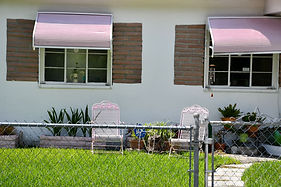
Urban change is often narrated through zoning maps, price indices, and aerial views. Those tools matter, but they flatten the human scale. Photography restores it. A photograph shows relationships: house to sidewalk, fence to yard, door to street—an orange-painted home set behind a chain-link gate, its porch arranged with plants and personal markers, its boundary neither fully open nor fully closed, registering daily life rather than abstraction. It shows whether a neighborhood still allows a certain kind of life.
It also documents that loss is not abstract. When Bahamian cultural influence fades in West Coconut Grove, it is not a metaphor. It is houses coming down, families leaving, and a landscape rewritten in the language of luxury.
My camera cannot stop that process. But it can name it clearly and refuse the comforting lie that disappearance is accidental.
Closing
West Coconut Grove is often described as changing. That word is too neutral. The more accurate word is conversion: the conversion of a culturally rooted, working community into a high-value real estate zone whose primary function is investment.
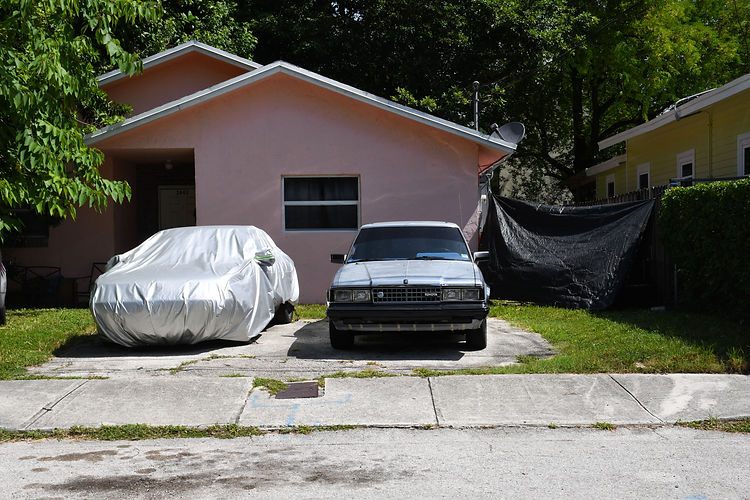
The photographs placed throughout this essay document that conversion at street level. They show the architectural traces of a Bahamian-founded community and the pressures that make those traces increasingly fragile.
If this project has an argument, it is this:
When rising home prices reorganize who can live in a place, they reorganize what the place is.
Architecture is not just shelter. It is identity made material. When it disappears, what disappears with it is remembered only after the market has already moved on.
References
Coconut Grove Spotlight. “Gentrification in Coconut Grove.” Coconut Grove Spotlight, 14 May 2024,
www.coconutgrovespotlight.com/2024/05/14/gentrification-coconut-grove-andy-parrish-opinion/.
Little Bahamas Miami. “The Pioneers of Little Bahamas.” Little Bahamas Miami, n.d.,
www.littlebahamasmiami.com/little-bahamas/the-pioneers/.
Miami and Beaches. “Little Bahamas Neighborhood.” Miami and Beaches, n.d.,
www.miamiandbeaches.com/neighborhoods/little-bahamas.
WLRN. “West Grove’s ‘Little Bahamas’ Designation Comes amid Gentrification.” WLRN, 7 Nov. 2024,
www.wlrn.org/development/2024-11-07/west-grove-little-bahamas.
WLRN. “Coconut Grove Housing Discrimination and Zoning Lawsuit.” WLRN, 24 July 2024,
www.wlrn.org/development/2024-07-24/coconut-grove-miami-housing-discrimination-black-segregation-lawsuit.